

Extending Comfort and Connection Beyond the Walls of Home
Summer has a way of expanding how we experience our homes.
As temperatures rise and daylight stretches into the evening, daily routines naturally begin to move outdoors. Morning coffee on the patio, family dinners under the open sky, and conversations that continue long after sunset become some of the season’s most memorable moments.
Yet many homeowners invest significant thought into their interiors while leaving their exterior spaces underutilized. The result is often an outdoor area that serves a purpose but doesn’t truly feel connected to the home itself.
Thoughtfully designed outdoor living spaces can change that. When approached with the same level of intention as an interior, an outdoor environment becomes more than a place to sit. It becomes an extension of the way you live.
Creating Outdoor Rooms That Feel Connected to the Home
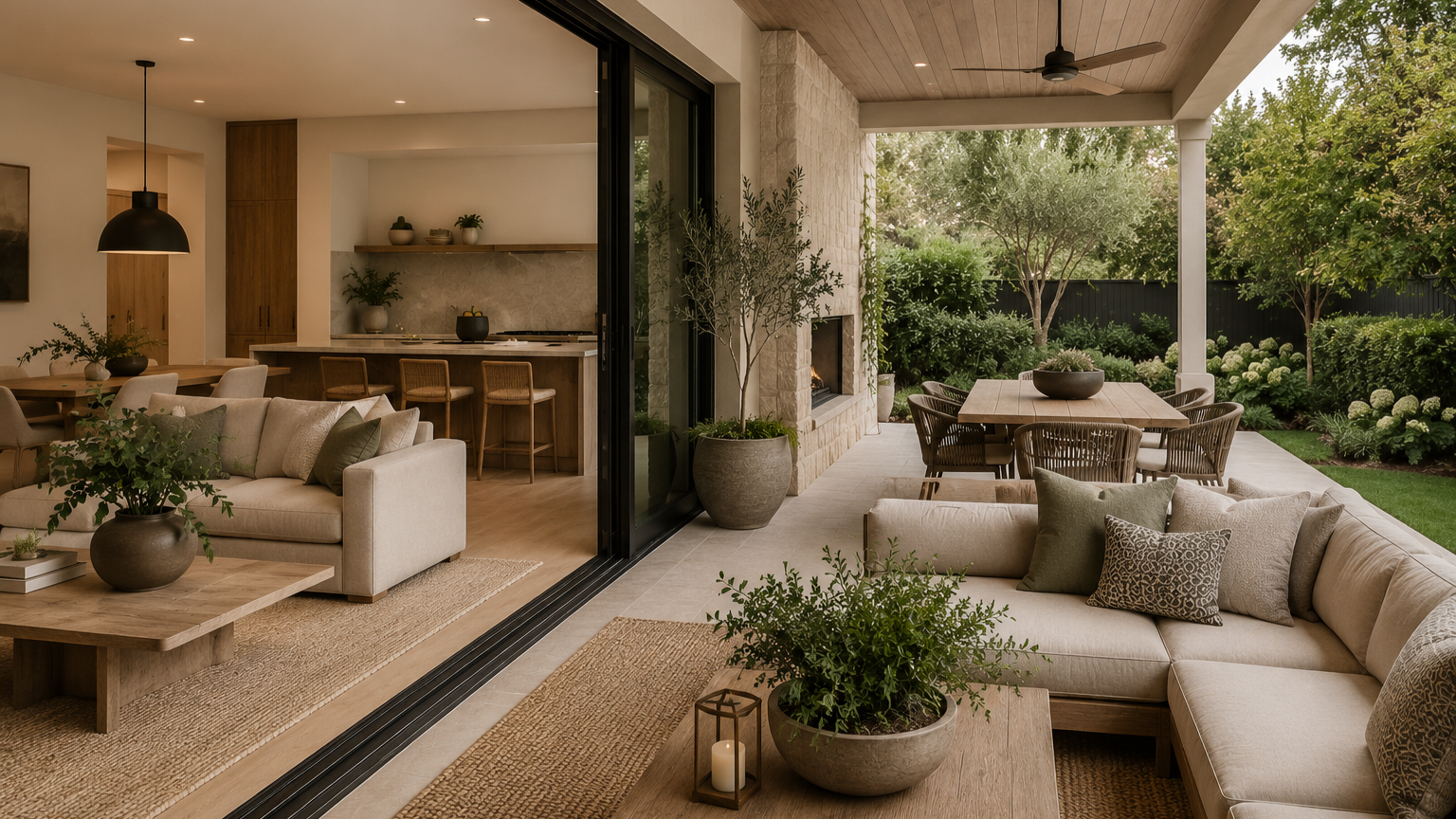
One of the most effective principles in outdoor space design is continuity.
The transition between indoors and outdoors should feel natural rather than abrupt. Just as every room inside your home contributes to a cohesive experience, your exterior spaces should support and reflect the overall character of the home.
This can be created through:
- Repeated colour palettes
- Complementary textures
- Similar furniture styles
- Consistent finishes
- Thoughtful sightlines from inside to outside
This doesn’t mean every material or detail needs to match perfectly. Instead, the goal is to create visual connections that make the outdoor space feel intentional rather than separate.
Pro Tip:
Look at the rooms that lead directly to your outdoor space. The colours, textures, and mood in those areas are often the best starting point for creating a cohesive outdoor design.
Designing for How You Actually Live
Great design begins with understanding how a space will be used.
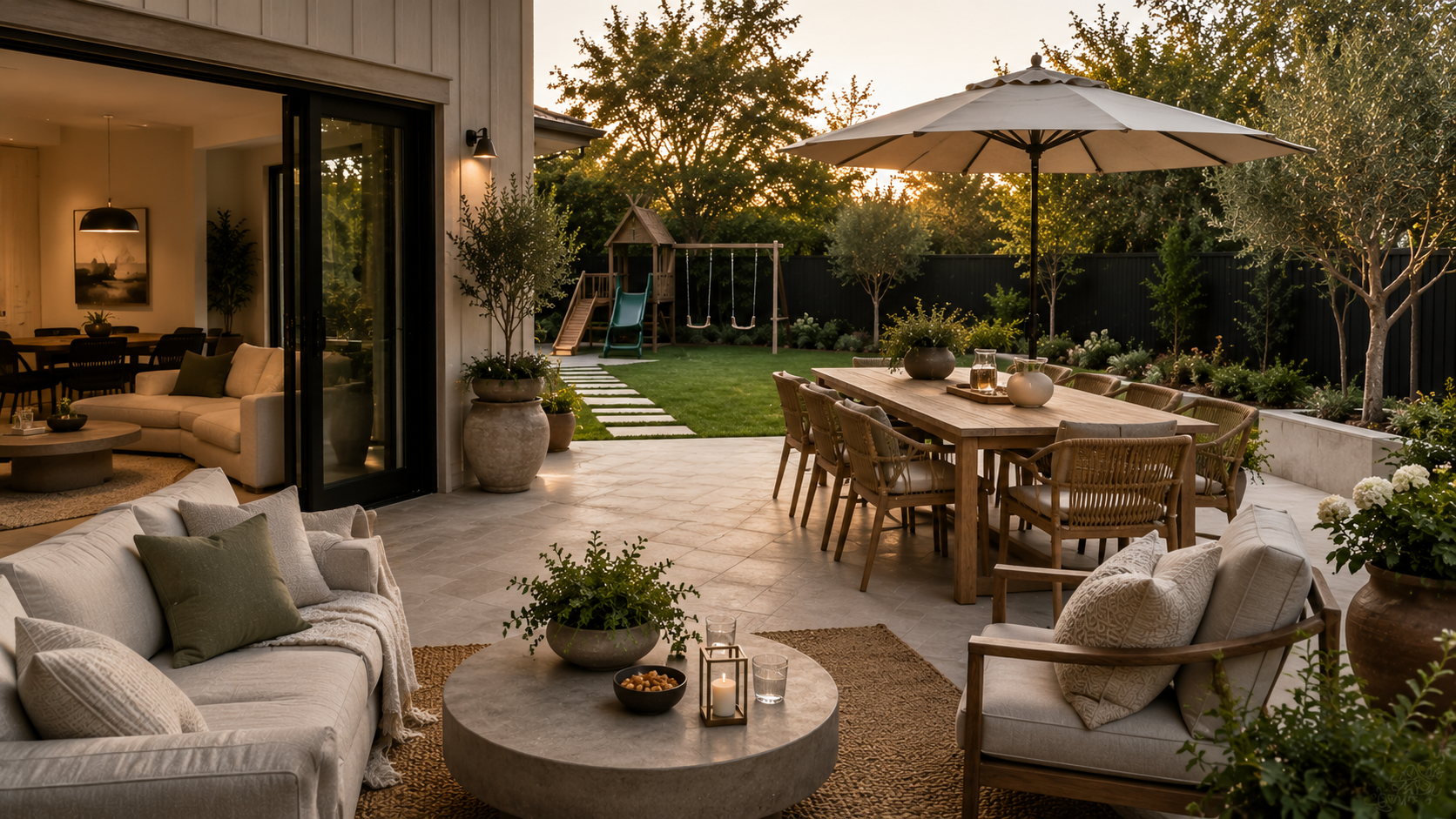
Before selecting furniture or accessories, consider how you want to spend time outdoors. Will the space primarily be used for entertaining? Is it a place for quiet relaxation? Does it need to support multiple activities throughout the day?
The answers should guide every design decision
By designing around your lifestyle rather than following trends, your outdoor living spaces become more meaningful and more likely to be used regularly.
Pro tip:
Start with the activity you want to enjoy most often, then design around that first. A space that supports real daily living will always feel more natural than one designed only for special occasions.
Comfort Should Never Be an Afterthought
Many outdoor spaces look beautiful in photographs but fall short when it comes to everyday comfort.
Just as interior spaces require thoughtful planning, outdoor environments benefit from careful consideration of scale, proportion, and usability. Comfortable seating, appropriate furniture placement, and a sense of balance all contribute to a space that people genuinely enjoy spending time in.
The goal is simple: create an environment where people want to linger.
Pro Tip:
When planning an outdoor seating area, think about conversation first. Chairs and sofas should feel close enough for easy connection without making the layout feel crowded.
The Role of Lighting in Outdoor Room Design
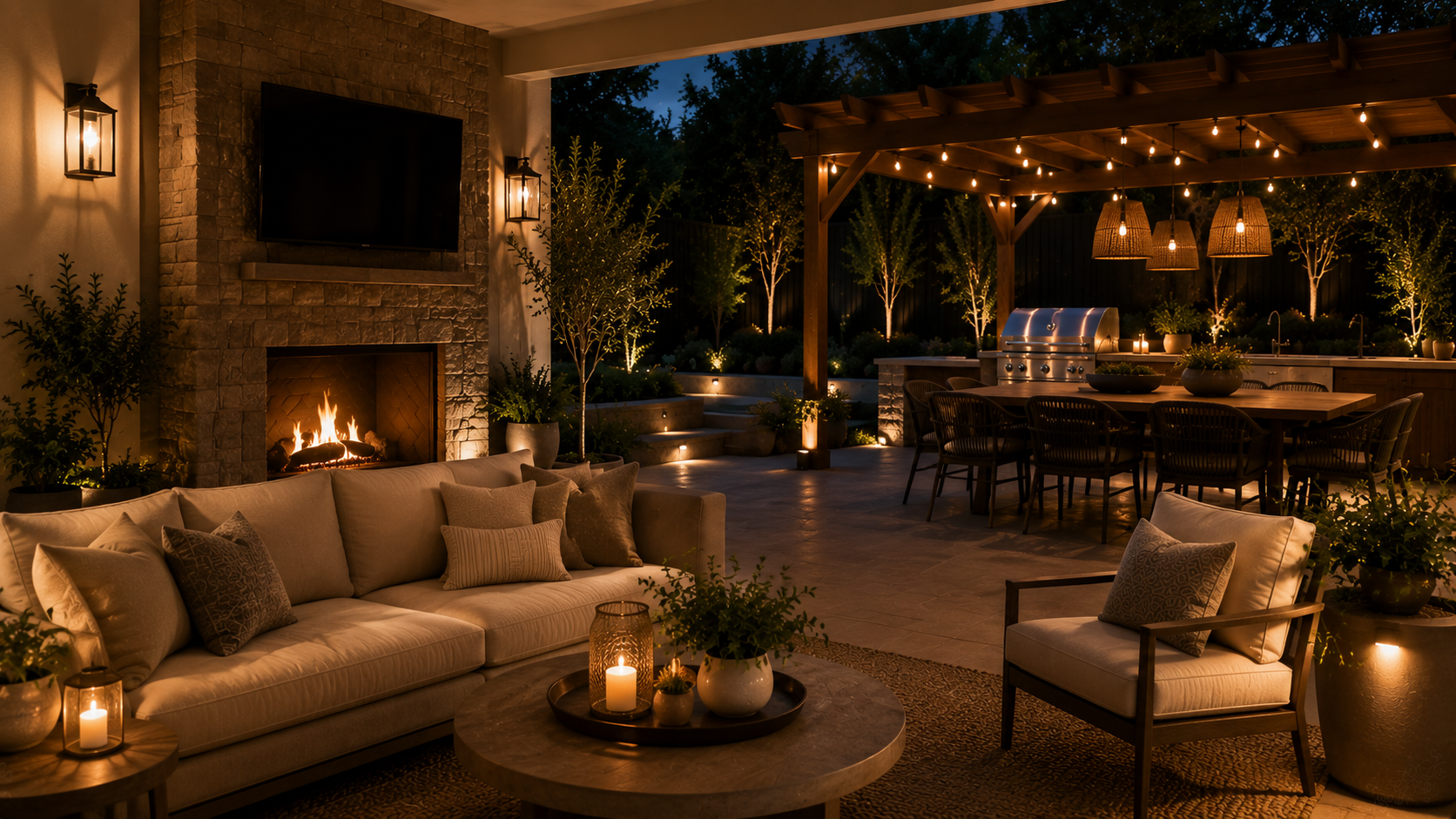
Lighting has the power to transform an outdoor area from functional to unforgettable.
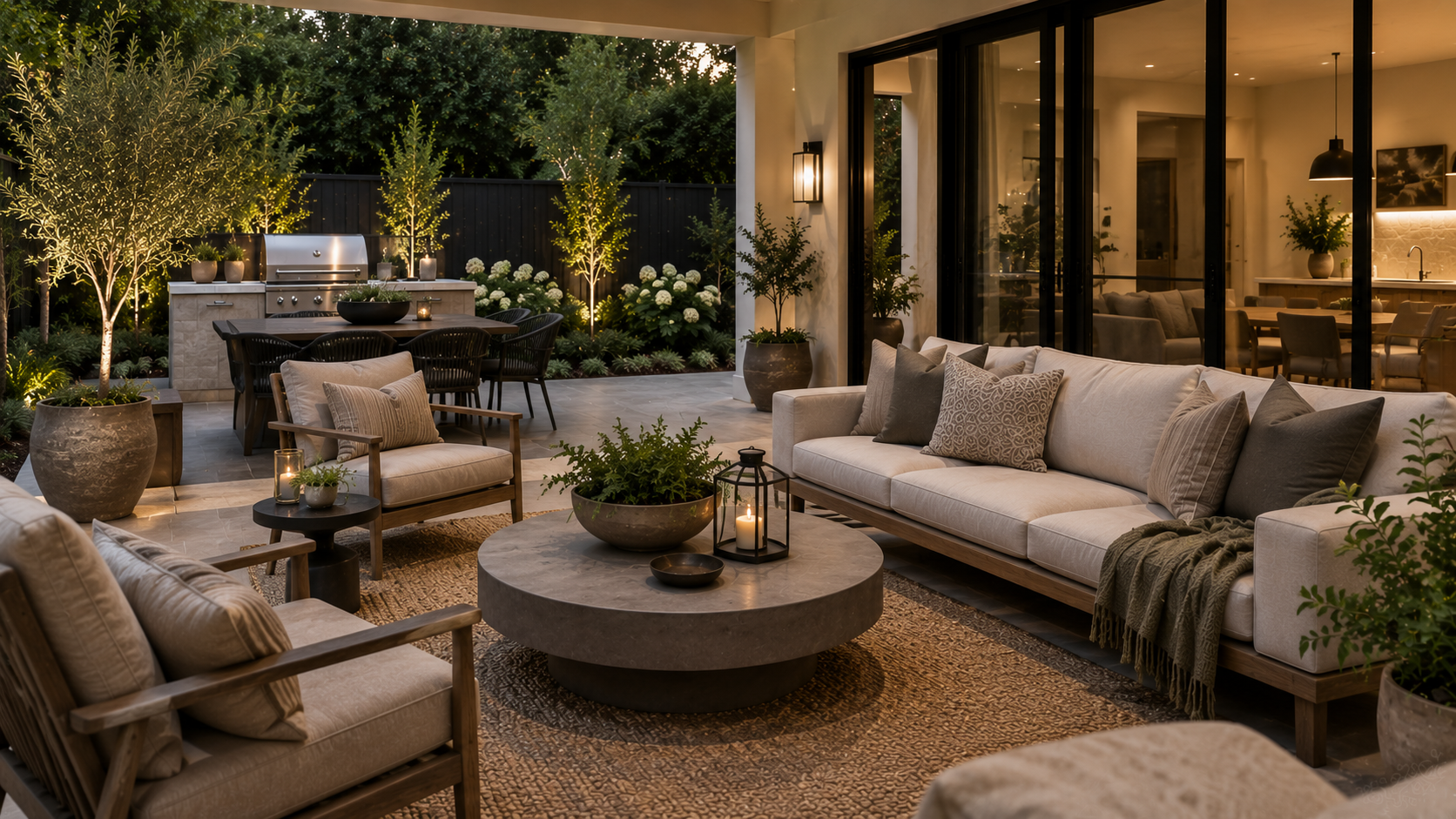
During the day, natural light defines the experience. As evening arrives, however, artificial lighting becomes one of the most important design elements within an outdoor room design.
Rather than relying on one overhead light, consider a layered approach:
- Ambient lighting for overall warmth
- Task lighting for dining or serving areas
- Accent lighting to highlight focal points
- Decorative lighting for personality and mood
Layered lighting creates depth, softness, and atmosphere. It allows the outdoor space to remain comfortable and inviting long after the sun sets.
Pro Tip:
Think of outdoor lighting the same way you would interior lighting. A mix of sources will always feel warmer and more welcoming than a single bright fixture.
Choosing Materials That Balance Beauty and Durability
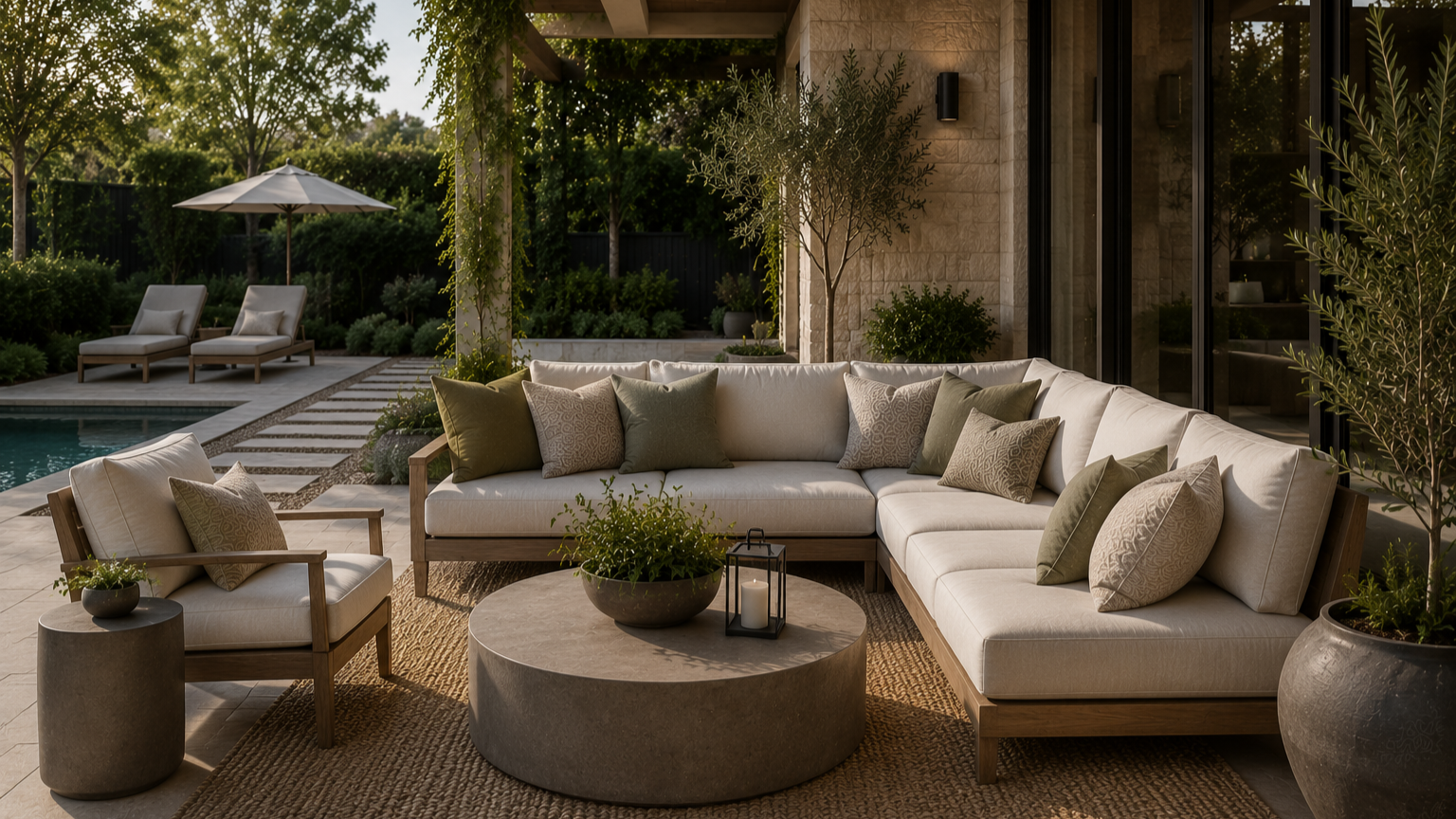
Exterior environments place unique demands on furnishings and finishes.
Sun exposure, moisture, temperature fluctuations, and everyday use all influence how materials perform over time. Selecting pieces that combine visual appeal with durability helps ensure your investment continues to look and function well for years to come.
Today’s outdoor furnishings offer a wide range of sophisticated options that don’t require sacrificing style for performance.
Pro Tip:
Choose fewer, better-quality pieces instead of filling the space quickly. Outdoor design should still feel refined, intentional, and aligned with the overall home experience.
Want more design inspiration?
Explore more insights, ideas, and inspiration to help you create a home that truly feels right for you.
Making Smaller Outdoor Spaces Feel Bigger
A successful outdoor living area isn’t defined by square footage.
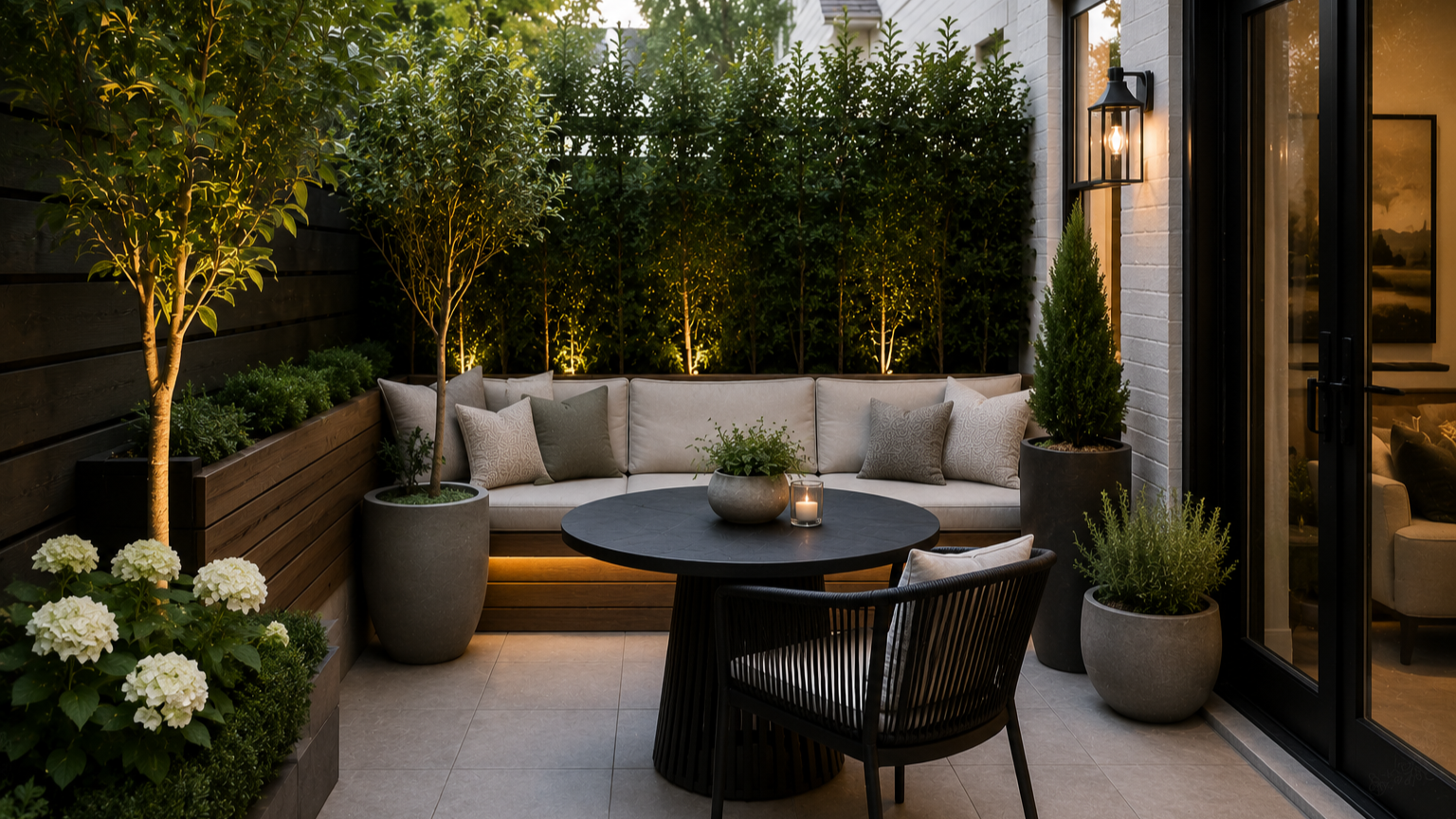
Whether you’re working with a compact patio, a small terrace, or a modest backyard, thoughtful planning can make a significant impact.
When every element serves a purpose, even the most compact outdoor area can feel welcoming and complete.
Pro Tip:
Avoid overcrowding a small outdoor space. Leaving a little breathing room can make the area feel more open, comfortable, and intentionally designed.
Make This the Summer Your Outdoor Living Spaces Feel Like Home
Some of summer’s best moments happen just outside your door.
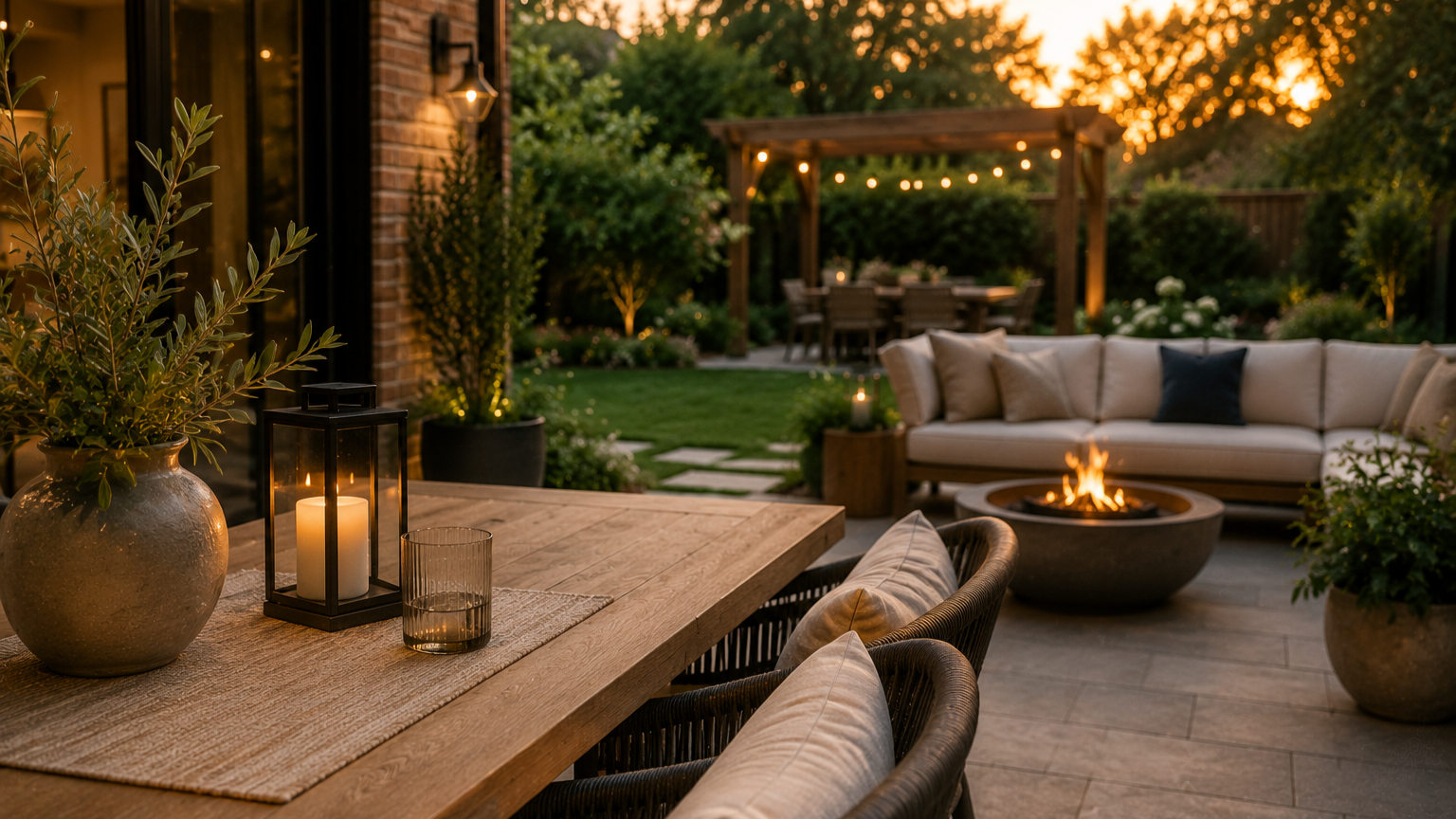
When outdoor living spaces are designed with intention, they create more comfort, connection, and ease in the way you live at home.
Thoughtfully designed outdoor living spaces help extend the feeling of home, creating a space that feels right for you.
Tracy Laqua
Interior Design Professional, in-ex-teriors™
Creating a home that feels right for you.
Other Projects You May Be Interested In
LET'S CHAT ABOUT YOUR PROJECT
Complete the form below for a no obligation consultation.